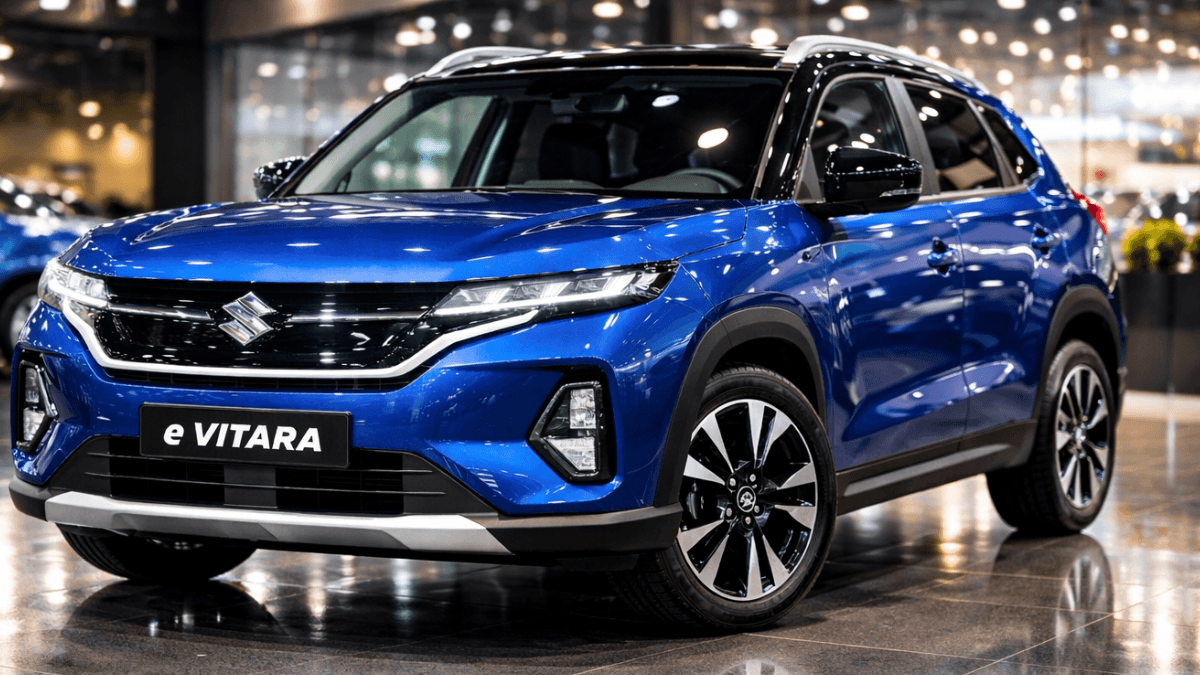
Maruti e Vitara 2026 is one of the most awaited electric SUVs in India right now. With a claimed 500KM range, modern design, and practical family-focused features, this new EV from Maruti Suzuki is already creating strong buzz in the market.
A Big Step for India’s Most Trusted Brand
For years, Indian car buyers have trusted Maruti Suzuki for reliability, fuel efficiency, and affordable ownership. From small hatchbacks to practical SUVs, the brand has always focused on what middle-class families truly need.
But the automotive world is changing rapidly. Electric vehicles are no longer futuristic concepts; they are becoming mainstream. The big question many people had was simple — when will Maruti finally launch a serious electric SUV?
That answer comes in the form of the Maruti Suzuki And after looking closely at what it offers, it feels less like an experiment and more like a calculated, confident entry into the EV segment.
This is not just a petrol SUV converted into electric. It appears to be designed from the ground up with modern EV expectations in mind.
Design That Feels Modern but Familiar
At first glance, the e Vitara has a strong road presence. The closed front grille, sleek LED lighting, and muscular stance immediately signal that this is a new-generation vehicle.
Yet, it doesn’t look overly aggressive or futuristic. Maruti seems to have kept the design balanced so that traditional buyers don’t feel disconnected.
When you imagine it parked outside a home or office, it looks premium without being flashy. That subtle confidence could work well for Indian buyers who prefer practicality over extreme styling.
The overall proportions suggest it will offer decent cabin space, which is critical for families upgrading from compact SUVs.
Smooth Electric Performance for Daily Life
The e Vitara comes with two battery options — 49kWh and 61kWh. Instead of focusing purely on speed numbers, the real highlight here is smoothness.
Electric motors deliver instant torque, and that changes the driving experience completely. In city traffic, the quick response at low speeds makes driving effortless.
There is no gear shifting, no engine vibration, and almost no noise. For daily commuters driving 20–40 km, this can significantly reduce fatigue.
On highways, acceleration feels linear and predictable. It may not be a performance-focused EV, but it offers enough power to overtake confidently and cruise comfortably.
Compared to electric SUVs from Tata motors Maruti seems to prioritize refinement and long-term reliability over aggressive sporty tuning.
Real-World Range That Makes Sense
Range anxiety is still one of the biggest concerns for Indian buyers considering EVs. The claimed range of over 500 km sounds impressive on paper.
In realistic driving conditions, a 400–450 km range seems achievable depending on traffic and driving habits. For most urban families, that means charging only once or twice a week.
That kind of convenience makes electric ownership feel practical rather than stressful. It removes the fear of constantly searching for charging points.
Fast DC charging support is another important advantage. Charging from 10% to 80% in around 30–40 minutes makes highway trips manageable with short breaks.
However, buyers in smaller towns should still evaluate local charging infrastructure before making a final decision.
Ownership Costs and Long-Term Value
One of the biggest strengths of Maruti cars has always been low maintenance. Electric vehicles naturally have fewer moving parts compared to petrol or diesel cars.
There are no oil changes, fewer mechanical components, and generally lower service costs over time. This could make the e Vitara more economical in the long run.
Another important factor is resale value. Traditionally, Maruti vehicles retain value well in the Indian market.
If the company leverages its vast service network effectively, it could create strong buyer confidence in the EV space too.
Is the Pricing Justified?
The expected price range between ₹20 lakh and ₹30 lakh places the e Vitara in the premium category. While that may seem high compared to entry-level Maruti cars, it aligns with current EV pricing trends.
When you factor in fuel savings, lower maintenance, and potential government incentives, the overall cost of ownership becomes more reasonable.
For buyers upgrading from mid-size SUVs, this pricing may feel acceptable if the features and range meet expectations.
Ultimately, value will depend on final specifications and real-world performance once deliveries begin.
Final Verdict: A Sensible Electric Upgrade
The Maruti Suzuki e Vitara 2026 feels like a carefully planned transition into the electric era. It does not try to shock the market with extreme claims or flashy gimmicks.
Instead, it focuses on practicality, comfort, and long-term ownership confidence — the very qualities that built Maruti’s reputation in India.
For families who want to shift to electric without taking a risky leap, this SUV could become a safe and sensible option.
If priced smartly and supported with strong after-sales service, the e Vitara might not just compete in the EV market — it could redefine expectations for mainstream electric SUVs in India.
For more details about Tata electric vehicles, visit the official website: Tata Motors Official Website